Want Something Changed? Measure It.
By Scott Downes, The Colorado Trust
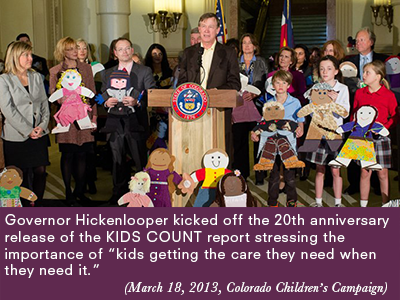
“What gets measured gets changed” were the concluding words of Colorado Children’s Campaign President and CEO Chris Watney at this year’s KIDS COUNT release. Flanked by Governor John Hickenlooper, Sen. Ellen Roberts and other legislators, cabinet members, children’s advocates and dozens of paper dolls carrying messages from kids across the state, Watney outlined how some child well-being indicators are seeing progress while more work remains in other areas.
Governor Hickenlooper kicked off the release announcement, which marked the 20th anniversary of the report, by stressing the importance of “kids getting the care they need when they need it.”
For most of the previous decade, Colorado languished above the national average of children without health insurance. However, since 2005, thanks in large part to specific efforts at the local, state and federal levels, the number of uninsured children in Colorado declined by 31 percent. In 2010, according to the U.S. Census Bureau, the number of uninsured children in Colorado fell to 113,000, or about 9 percent, a decrease of 4,000 kids from the previous year. The percentage of children without insurance in Colorado is now at its lowest rate since 1992.
These national data align with Colorado Health Access Survey (CHAS) findings which similarly show positive gains in covering more Colorado kids. The 2011 CHAS showed that 8.2 percent of Colorado children remain without health insurance.
Even as these important gains were acknowledged, the KIDS COUNT report offered sobering news in other areas. Children who still do not have health insurance face critical barriers in being able to get the care they need to grow up healthy. Indicators on the number and percent of children living in poverty continued to increase through 2011, with Colorado remaining among the states with the fastest growing rates of child poverty since 2000.
Significant differences exist for Colorado children depending on where they live, what their families earn, their race and ethnicity and other circumstances. For many kids, these factors influence whether they have access to health care, get a good education or have the opportunity to grow up in a safe and healthy environment.
The KIDS COUNT report shows that both community engagement and data matter. Data are an important part of this equation because they tell us where we are compared to where we need to be. Communities making their voices heard assure that we continue to tackle the critical challenges we face. Whether it’s at the statehouse or on your very own street, communities are working together to help the next generation of Coloradans grow up healthy, safe and ready to learn.