
Saving More Lives Through Rapid Response
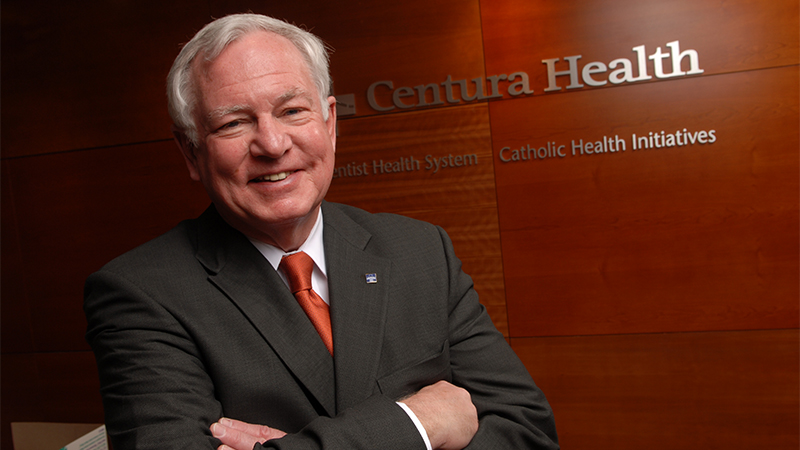
By establishing Rapid Response Teams, Colorado’s largest hospital system brought about sweeping changes in communications and collaboration across its 12 hospitals.
Sometimes new methods in health care grow slowly, with best-practices being passed over time from hospital to hospital. When Colorado’s largest hospital system committed to developing Rapid Response Teams, they instead made a sweeping change that impacted all of its 12 hospitals at once.
“Centura’s leadership jumped on board quickly with the 100k Lives Campaign,” said Lisa Camplese, RN, Vice President of Clinical Quality and Care Coordination at Centura Health. “We saw that we could make big changes with some relatively simple steps. With regard to Rapid Response Teams, we wanted to see an immediate impact on mortality, so we implemented them simultaneously at all hospitals.”
The teams are there to rapidly assess a patient whose condition appears to be declining. They include an intensive care registered nurse and respiratory therapist, and often a physician and hospital chaplain as well. The team can be called into action by any caregiver, who may perceive such things as an acute change in a patient’s respiratory status, heart rate or blood pressure, or may simply have a gut instinct that the patient is worsening for some reason.
“Sometimes a patient’s decline is rapid, while other times the changes are subtle,” says Barb Martin, RN, Clinical Coordinator at Centura’s Littleton Adventist Hospital. “Rapid Response Teams help us stop the cascade of a patient going downhill.”
According to Camples, the teams also teach nurses to trust their instincts. “They know their patients, and are often in the best position to notice a sudden or gradual decline in their condition.”
So far, the program seems to be working. In the first six months, Rapid Response Teams were activated 247 times in Centura hospitals. During the same period of time, the system’s number of “code blues” (where a patient stops breathing or a patient’s heart stops beating) dropped by 22 percent. In all, Centura estimates it prevented the deaths of 75 people in the first six months of the Rapid Response Team program.
Communications and collaboration also are improved among caregivers, observes Camplese, leading to increased satisfaction in their jobs. Hospitals like Centura’s St. Mary-Corwin in Pueblo have ceremonies to reward clinicians who call the Rapid Response Team, encouraging them to trust their instincts and know that there’s no such thing as a bad call.
While these are all great changes for Centura’s hospitals, Camplese says they’re not done yet. “Our next frontier is to involve patients and families in Rapid Response Teams. We want to encourage anyone who knows the patient to trust their instincts and call for help when they think they need it.”
