
New Technologies to Keep Medications Safe
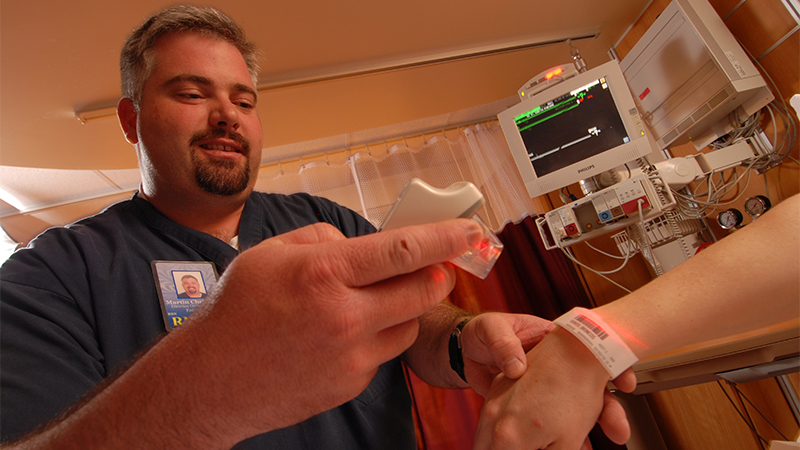
In Pueblo’s Parkview Medical Center, a new computer database network is preventing adverse drug events through on-the-spot medication reconciliation.
While many of the interventions in the 100k Lives Campaign are simple, preventing medication errors was widely seen as among the most challenging for Colorado hospitals to undertake.
Medication errors and resulting patient injuries are referred to as adverse drug events (ADE). According to the Institute for Healthcare Improvement, hospitalized patients who experience an ADE are almost twice as likely to die as those who don’t. More than 7,000 patients die annually in U.S. hospitals from ADEs.
Medication reconciliation—the process of determining what to do about every medication the patient is taking—helps ensure that patients receive all intended medications and no unintended medications following transitions in care locations within the hospital.
“One of the things we realized early into the campaign was that preventing adverse drug events through medication reconciliation was really difficult to do,” said Judy Sikes, Director of Accreditation and Medical Staff Services at Parkview Medical Center in Pueblo. “There are so many variables in getting an accurate medication history, and so many people involved in the delivery of medications both during and after the patient’s hospital visit. One mistake can have devastating consequences.”
According to Vice President of Nursing/Chief Nursing Officer Eileen Dennis, the hospital addressed the issue in an aggressive way, investing in technological upgrades to improve the process, reduce errors and keep patients safe.
A new computer database network allows Parkview to enter a patient’s name and within minutes get back all medications prescribed to that patient in the past year from a majority of pharmacies throughout Colorado. The process helps the hospital reconcile differences between what patients say they’re taking and what they’ve actually been prescribed, and determine what to do about each of those medications during the hospital stay.
Parkview also invested in a state-of-the-art medication administration system. Every medication is bar-coded, either by the manufacturer or at the hospital, and then scanned at multiple points before it’s delivered to the patient. It’s then verified against the patient’s own wristband at the bedside. A handheld wireless device not only lets caregivers know whether it’s the right medication at the right dosage for the right patient, but warns them if it’s being given too soon and prompts them for a patient’s vital sign if it is required before the medication is administered.
Together these systems significantly reduce the chance of error, says Eileen, noting that that employees benefit as well as patients.
“I’ve had nurses leave Parkview to work elsewhere and then come back to us,” said Eileen, “saying they felt vulnerable delivering medications in a setting where they didn’t have this system backing them up. It really is one of the most significant changes in hospital care in many years.”
