
High Tech Meets High Touch: Innovative Colorado Partnership Improves Health Care Quality and Patient Safety
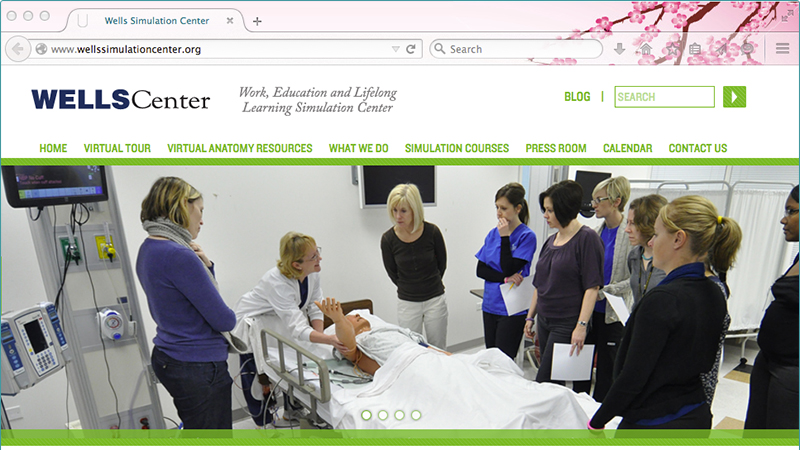
As part of its multi-year commitment to strengthen patient care and safety, The Colorado Trust supported a successful collaboration among health care educators, providers and policymakers that led to the establishment of the nation’s first simulation training to improve patient safety and quality of care.
In recognition of The Colorado Trust’s 25th anniversary, we are featuring stories throughout the year noting the accomplishments of a few of the many remarkable people, organizations and communities we have had the privilege of working with over the years on our shared goal of improving the health and well-being of Coloradans.
About the only difference between a private room in a hospital ICU and an identically equipped room at a health care simulation training facility owned and operated by the University of Colorado Hospital (UCH) on the Anschutz Medical Campus is the presence of ceiling-mounted cameras and microphones. Plus the male mannequin, adorned with a tattooed bicep, lying in wait to be animated by a skilled simulation lab technician.
This talented individual will direct and play multiple roles behind a one-way mirror as lifelike medical scenarios unfold: a heart attack, an infection, a traumatic injury. The responses of participants are captured on video for use in debriefing sessions with the hundreds of health care professionals trained each year.
Ten years ago it was becoming apparent that access to clinical training opportunities was a challenge for health professions students and nurse professionals, physicians’ assistants, respiratory therapists and other health care providers. A shortage of appropriate sites and mentors combined to create a bottleneck in the education and credentialing of nurses and physicians, as well as veterans seeking to enhance their competency and skills. Meanwhile, high-fidelity mannequins were becoming increasingly common in nursing programs. According to the Colorado Center for Nursing Excellence, the technology was threatening to outpace the educators’ ability to incorporate it effectively into their curricula.
Consequently, the Work, Education and Lifelong Learning Simulation (WELLS) Center was founded in 2005 through a partnership initiated by the Colorado Department of Labor and Employment (CDLE) and the Colorado Center for Nursing Excellence. They brought hospitals and educators together from across the state to see how they could break the logjam and optimize deployment of new learning technologies.
“One of the pieces of our strategy was to create a collaborative simulation center,” said Jana Faragher, ND, founding director of the WELLS Center and Director, Western Slope at the Colorado Center for Nursing Excellence. “It was clear to us, if we do it collaboratively, not everyone needs to do it on their own.”
Marshalling funding and in-kind contributions from multiple sources, including the Colorado Workforce Development Council, UCH, University of Colorado Health Sciences Center, Colorado Area Health Education Centers, Rocky Mountain PBS, Touch of Life Technologies, Inc. and federal grants, the 5,000-square-foot center was built and outfitted with state-of-the-art equipment and technology. “CDLE was the risk taker and the visionary for the development and implementation of the simulation center but it took teamwork to make this happen,” said Faragher.
But walls and equipment are only part of the simulation equation. As part of the Colorado 5 Million Lives Campaign, a national patient safety initiative of the Institute for Healthcare Improvement, The Colorado Trust awarded CDLE a grant to support the development and implementation of detailed simulation scenarios that help health care providers acquire and refresh clinical knowledge, competence and confidence required to respond to a variety of medical situations. Additionally, Colorado 5 Million Lives Campaign grants from The Colorado Trust made available to 54 hospitals opportunities to access simulation trainings and patient safety education.
“The 5 Million Lives Campaign was very successful in the fact that a technician and nurse facilitator were able to literally pack up the mannequins in a car and travel to rural sites in Colorado,” explained Faragher. “They’d arrive, unpack the mannequins and provide this experience to the hospital staff that otherwise wouldn’t get it. You can’t just take people out of a hospital to come to Denver for training when there’s no one to backfill for them.”
Simulation provides opportunities to increase patient safety in hospitals by creating a setting and circumstances where participants can make mistakes, correct them and become more proficient and efficient without putting any patients at risk.
